



Heart health is not short on numbers. It is short on context. Here is the latest global picture, the science behind a number you already carry on your wrist, and where Pauser fits.
Every September 29, World Heart Day puts the same topic back on the agenda. The reason is simple: cardiovascular disease accounts for roughly one in three deaths worldwide.1 No other health issue comes close.
This article looks at what the most recent research actually shows, which parts of the picture are within your reach, and why the heart rate number on your smartwatch is only half of the story.
Heart health in numbers
The Global Burden of Disease study, which tracks health data across 204 countries and territories, reported 19.2 million cardiovascular deaths in 2023, up from 13.1 million in 1990.1 Around 626 million people are currently living with some form of cardiovascular disease.
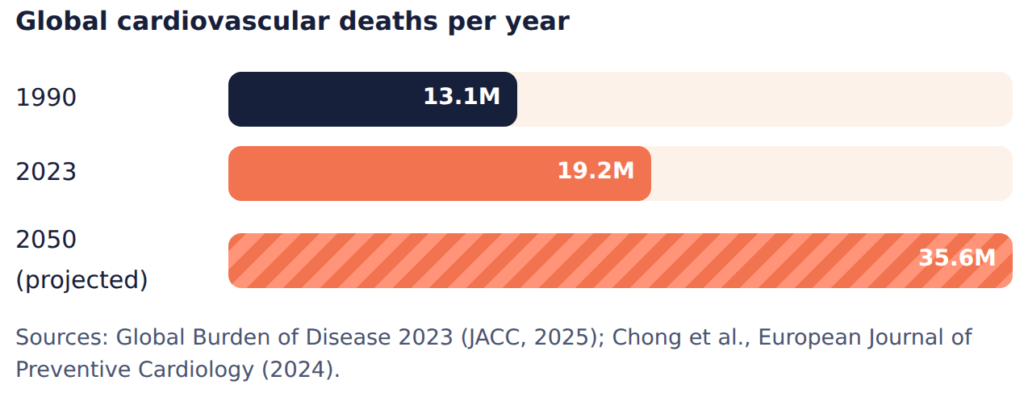
Projections suggest that figure could reach 35.6 million deaths a year by 2050.
There is an important nuance. Over the same period, age-standardized death rates are projected to fall by about 30%.2 In other words, care is improving. The totals keep climbing because the world's population is growing, aging, and living with more everyday risk.
Most of the risk is within reach
Here is the more hopeful half of the data. More than four in five cardiovascular deaths are associated with modifiable risk factors.3
The landmark INTERHEART study, which compared about 15,000 people who had a first heart attack with matched controls across 52 countries, found that nine modifiable factors accounted for over 90% of the risk.4 The list included smoking, blood pressure, blood lipids, diabetes, abdominal obesity, diet, physical activity, alcohol, and psychosocial stress.
That last one is easy to overlook. In INTERHEART, stress at work, stress at home, and financial stress were each associated with higher heart attack risk, and the pattern held across regions, ethnic groups, and both sexes.4
The awareness gap
If most of the risk is modifiable, why do the numbers keep rising? Part of the answer is that people cannot act on signals they never see. Blood pressure shows this clearly.
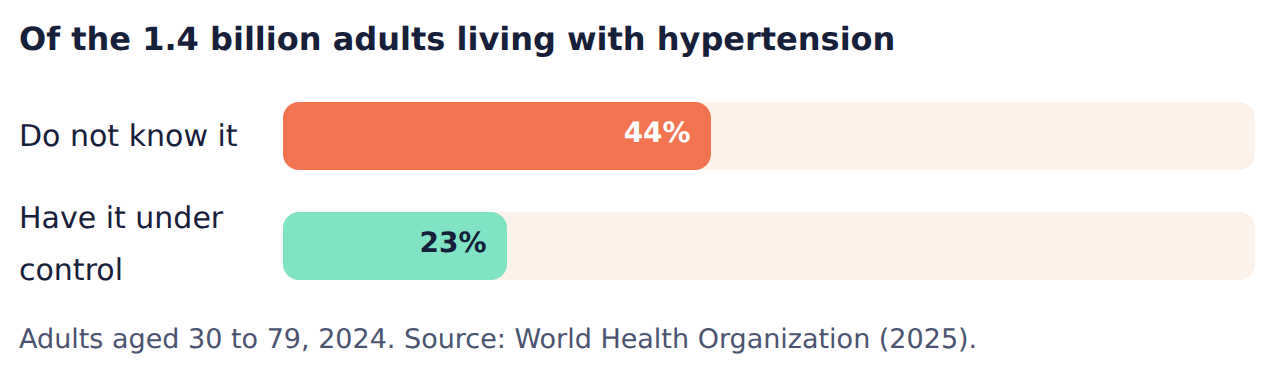
According to the World Health Organization, about 600 million adults with hypertension are unaware of it, and only 23% have it under control.5
Pauser does not measure blood pressure, and a wearable is not a substitute for getting yours checked. We include these figures because they show the pattern that runs through all of heart health: the signal exists, but most people never see it.
The signal you already carry: resting heart rate
For most adults, a resting heart rate between 60 and 100 beats per minute is considered typical, and people who are very active often sit lower.
It is also one of the most studied markers in physiology. A meta-analysis covering more than 1.2 million people found that each 10 bpm increase in resting heart rate was associated with 9% higher all-cause mortality and 8% higher cardiovascular mortality, even after adjusting for traditional risk factors.6
Two cautions. This is a population-level association, not a prediction for any one person. And a single reading means very little. What carries information is your own trend over weeks and months, and how your heart rate behaves across the moments of your day.
Hundreds of millions of people now wear a device that records exactly that, around the clock.
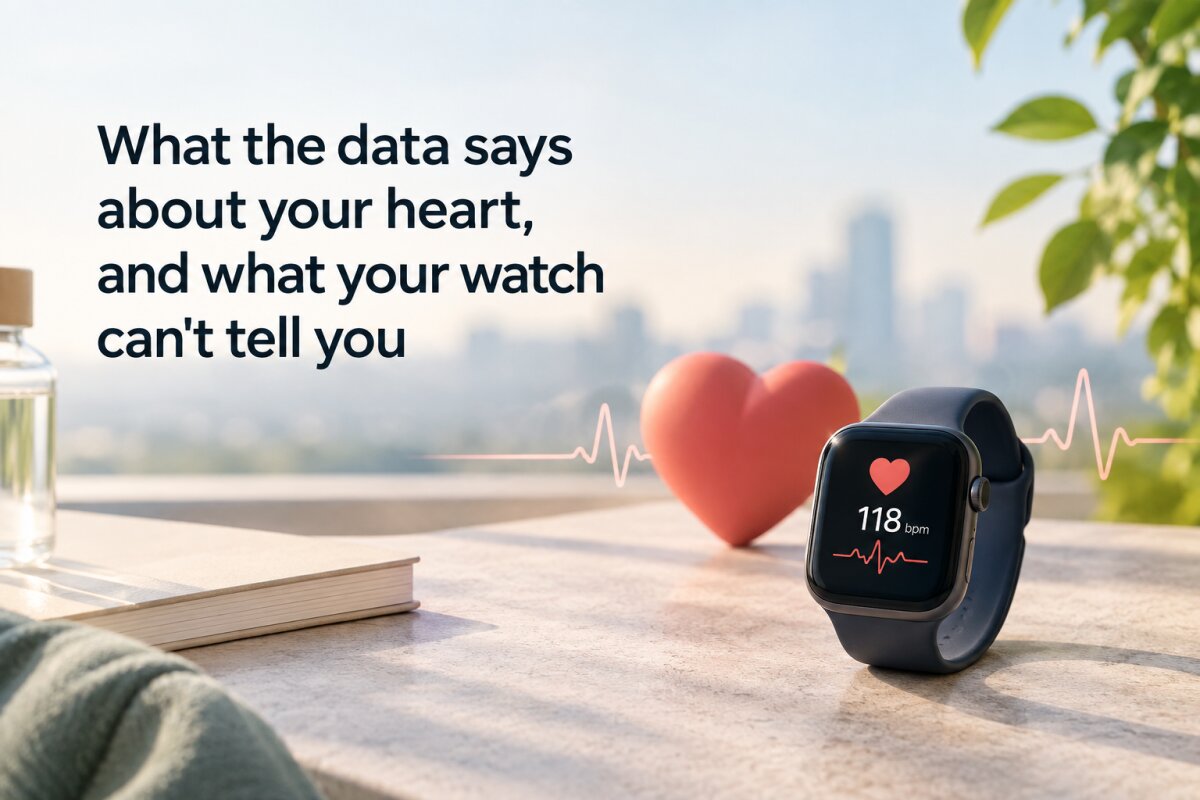
Your watch can tell you your heart rate hit 118 bpm at 3:40 PM. It cannot tell you why.
Why the number is only half the story
Heart rate is a responsive signal. It moves with what you do, what you consume, how you slept, and how you feel. Common everyday contexts include:
Stress and emotionA tense meeting, a difficult call, a deadline
CaffeineEspecially later in the day or on an empty stomach
SleepA short or broken night often shows up the next day
Heat and hydrationWarm rooms, hot weather, not enough fluids
Posture and movementStanding up quickly, stairs, long periods of sitting
Illness and recoveryYour body working harder than usual
Without context, a high heart rate notification tends to produce one of two reactions: anxiety or indifference. Neither helps. With context, the same number becomes a pattern you can learn from and, where it matters, discuss with your doctor.
How Pauser helps
Pauser is built on a simple idea we call Contextual Biofeedback Intelligence: connect the heart rate data from your Apple Watch or Wear OS watch with what was happening in your life at that moment.
Pause Signal
You set a heart rate threshold. When your heart rate crosses it, Pauser sends a gentle alert inviting you to pause and notice the moment.
Trigger Tracker
You tag what was going on: stress, caffeine, poor sleep, heat, or anything else. You choose the tags. Pauser does not guess or decide for you.
Compare & Correlate
Over time, see how your tags and your heart rate line up, so patterns replace guesswork.
Guided Pause Sessions
Short, guided breathing sessions for the moments when you want a minute to settle.
Standing Check and POTS Mode
For people who want to observe how their heart rate responds when they move from sitting or lying down to standing.
Pauser will not replace a blood pressure check, a screening, or a physician. What it can do is help you arrive at that appointment with a clearer record of what your days actually look like.
Five habits the evidence supports
- Know your numbers. Have your blood pressure, cholesterol, and blood sugar checked on the schedule your doctor recommends.
- Move most days. The World Health Organization recommends at least 150 minutes of moderate activity a week for adults.
- Protect your sleep. Most adults do best with seven to nine hours, on a consistent schedule.
- Do not smoke, and keep alcohol moderate.
- Take stress seriously. Notice what sets it off for you, and build short pauses into your day.
Tags: Heart Rate, Pauser