


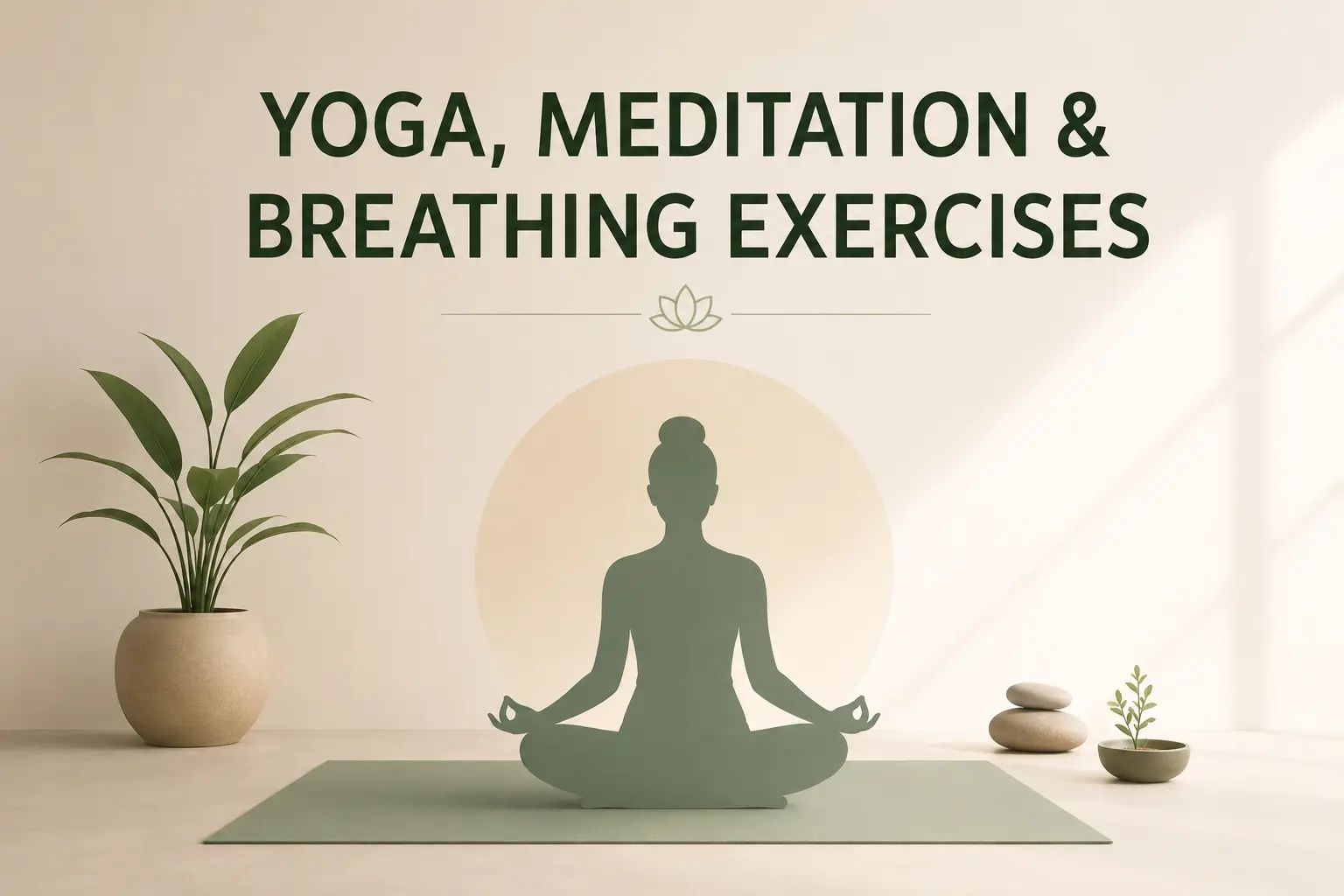
Yoga, meditation and breathing exercises have become popular ways to support physical health, mental wellbeing and stress management. But you do not need to be an experienced yogi or spend an hour meditating every day to benefit from them.
Sometimes, a few minutes of mindful breathing, gentle movement or meditation can be enough to pause, check in with yourself and become more aware of how your body feels.
From stress relief and better sleep to flexibility, relaxation and mindfulness, these practices can become simple tools for everyday health.
What Are the Benefits of Yoga, Meditation and Breathing Exercises?
Yoga, meditation and breathing exercises work in different ways, but they share one important idea: building a stronger connection between your mind and body.
Regular practice may help support:
- Stress management and relaxation
- Mindfulness and mental wellbeing
- Better body awareness
- Flexibility and mobility
- Balance and movement
- Healthy sleep routines
- Breathing awareness
- Physical activity and overall wellbeing
They should not replace medical treatment, but they can complement a healthy lifestyle and appropriate healthcare.
Breathing Exercises for Stress and Relaxation
We breathe automatically, but our breathing can change when we are stressed, excited, exercising or overwhelmed.
Learning to notice your breathing can be a simple way to pause and reconnect with your body.
Diaphragmatic Breathing
Also known as belly breathing, this technique focuses on allowing the diaphragm to move naturally as you breathe.
Sit or lie comfortably, place a hand on your abdomen and notice how your breathing feels. Keep the breath gentle rather than trying to take unusually deep breaths.
Slow Breathing
Slow, comfortable breathing can be incorporated into meditation, yoga or a short relaxation break.
Instead of forcing a specific breathing pattern, gradually allow your breathing to become slower and more comfortable.
Box Breathing
Box breathing follows four stages:
Inhale → Hold → Exhale → Hold
It is often used as a structured breathing exercise for focus and relaxation. If holding your breath feels uncomfortable, return to natural breathing.
Alternate Nostril Breathing
A traditional yoga breathing practice, alternate nostril breathing involves breathing through one nostril at a time.
It is commonly practiced as part of yoga and mindfulness routines.
The key is comfort. Breathing exercises should never leave you feeling dizzy, faint or unwell.
Different Types of Meditation
There is no single “right” way to meditate. Different meditation techniques work for different people.
Mindfulness Meditation
Mindfulness meditation involves focusing your attention on the present moment.
You might notice your breathing, sounds, thoughts or physical sensations. When your mind wanders, gently bring your attention back.
Body Scan Meditation
A body scan involves slowly paying attention to different areas of your body.
You may notice tension, warmth, pressure or other sensations without trying to change them.
Guided Meditation
Guided meditation uses spoken instructions to help you focus and relax. It can be particularly useful if you are new to meditation.
Loving-Kindness Meditation
This practice focuses on developing feelings of kindness and compassion toward yourself and others.
Walking Meditation
Meditation does not have to happen while sitting.
Walking slowly while paying attention to your breathing, movement and surroundings can also become a mindfulness practice.
Yoga for Physical and Mental Wellbeing
Yoga combines movement, stretching, breathing and mindfulness.
Different styles of yoga offer different levels of intensity, from gentle restorative yoga and chair yoga to more physically demanding practices.
Regular yoga practice may support:
Flexibility: Gentle stretching can help maintain mobility.
Balance: Yoga poses can encourage body awareness and balance.
Strength: Many poses require controlled muscle engagement.
Stress relief: Combining movement with mindful breathing can create time to slow down.
Mindfulness: Yoga encourages attention to your body and breathing rather than simply moving through exercises automatically.
You do not need to be flexible to start yoga. The right practice is one that matches your current ability and feels comfortable.
Yoga, Meditation and Different Health Conditions
People often search for yoga for anxiety, meditation for stress, breathing exercises for relaxation, yoga for better sleep and exercises for chronic health conditions.
These practices may complement healthcare, but they are not universal treatments.
Stress and Anxiety
Mindfulness, meditation, yoga and controlled breathing can be useful tools for managing everyday stress and creating moments of relaxation.
Persistent or severe anxiety should be discussed with a qualified healthcare professional.
Sleep Problems
A short meditation, gentle yoga routine or breathing exercise before bed may help create a relaxing bedtime routine.
However, ongoing sleep problems can have many underlying causes and may require professional evaluation.
Chronic Pain
Gentle movement and mindfulness may help some people become more aware of their physical sensations and responses to pain.
Exercise should always be adapted to individual ability and medical needs.
POTS and Dysautonomia
For people living with POTS (Postural Orthostatic Tachycardia Syndrome) or dysautonomia, physical activity and movement may need to be carefully adapted.
Symptoms can vary significantly between people. Factors such as prolonged standing, heat, exercise, sleep, meals, travel and daily stress may also influence how someone feels.
There is no one-size-fits-all exercise routine for POTS. A healthcare professional can help determine which activities are appropriate.
Long COVID and Post-Viral Conditions
People with Long COVID may experience fatigue, changes in heart rate, exercise intolerance and other symptoms.
Gentle activity may be appropriate for some people, while others may experience worsening symptoms after exertion.
Listening to your body and working with an appropriate healthcare professional is important.
A Simple 5-Minute Mindfulness Routine
You do not need a complicated wellness routine.
Try this:
1. Pause
Sit comfortably and put your phone aside.
2. Breathe
Take a few comfortable, natural breaths.
3. Notice
Pay attention to your heart rate, breathing, muscle tension and energy level.
4. Reflect
Ask yourself: How am I feeling right now?
5. Look at the context
Think about what happened today. Did you sleep well? Exercise? Eat regularly? Spend time in the heat? Have a stressful conversation? Stand for a long time?
This final step is important because your body’s signals rarely exist in isolation.
Your Health Data Needs Context
Your heart rate, breathing, sleep and activity can tell you what happened.
But context can help you understand why it happened.
A change in heart rate might occur during exercise. It might also happen after poor sleep, during a stressful meeting, in hot weather or after prolonged standing.
This is where health tracking becomes more meaningful.
Pauser helps connect continuous heart-rate information with everyday context, allowing you to explore the relationship between your body’s signals and the events happening around you.
Because your health is more than a number.
It is the story behind the number.
Take a Pause. Pay Attention to Your Body.
You do not need to completely change your routine.
Start with five minutes.
Try a breathing exercise. Take a mindful walk. Practice gentle yoga. Sit quietly and notice how you feel.
Then start paying attention to the triggers, routines, places, people and life events that surround changes in your body.
The goal is not simply to track what happened.
It is to understand the context behind it.
This article is for general educational and wellness purposes and is not a substitute for medical advice, diagnosis or treatment. If you have a medical condition or experience concerning symptoms, consult a qualified healthcare professional before starting a new exercise or breathing routine.