


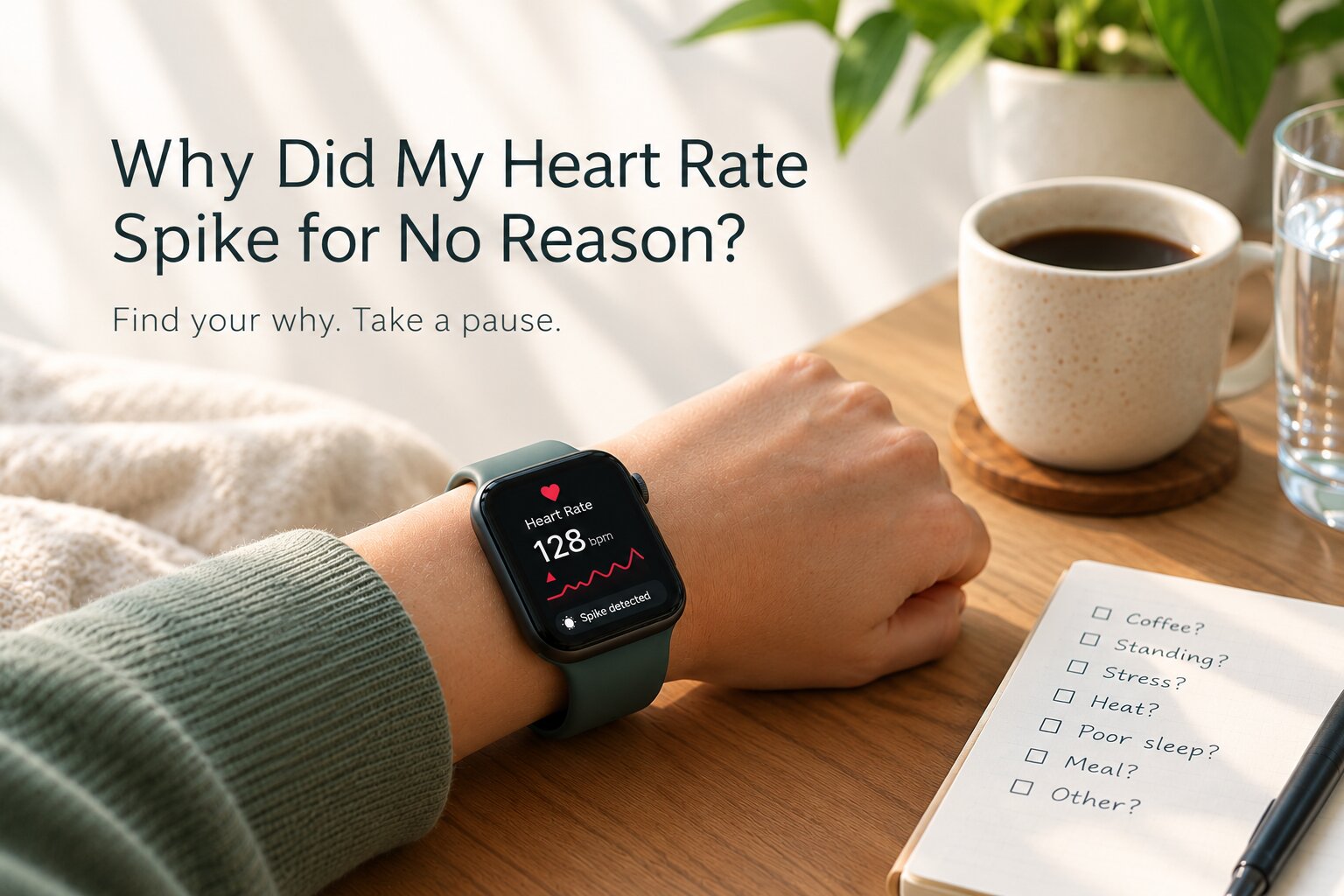
Your watch buzzed. Your heart rate jumped. You were just sitting there. Here is what is usually behind a spike that seems to come from nowhere, and how to find your own answer.
The short answer
A heart rate spike almost always has a reason. What it often does not have is a visible reason. By the time you open the graph that evening, the moment is gone. You see a number, a timestamp, and a blank where the context used to be. That blank is what makes it feel random.
The good news: most everyday spikes trace back to a short list of ordinary things.
Common everyday reasons your heart rate rises
Caffeine and other stimulants
Coffee, energy drinks, strong tea, and some cold medications can raise heart rate for hours after you have them. A 2 PM espresso can still show up in your 5 PM numbers.
Standing up or changing position
Moving from lying or sitting to standing asks your body to push blood upward against gravity. Heart rate rises to help. For most people this settles quickly. For some, especially people managing conditions like POTS or other forms of dysautonomia, the rise can be larger and last longer.
Stress, emotion, and anticipation
A tense email, a difficult conversation, even remembering something stressful can activate your body's alert response. Your heart does not know the difference between a real deadline and a remembered one. These are some of the easiest spikes to forget, because nothing physical happened.
Heat and dehydration
When you are warm or low on fluids, your heart works harder to keep blood moving and to cool you down. A stuffy room or a skipped water bottle can quietly nudge your numbers up all afternoon.
Poor sleep the night before
Short or restless sleep is often followed by a higher resting heart rate the next day. If your "random" spikes cluster after bad nights, that is a pattern worth noticing.
Meals, alcohol, and blood sugar swings
Large meals send blood toward digestion. Alcohol can raise heart rate during the night and into the next morning. Long gaps between meals can do it too.
Illness, hormones, and medications
Fighting off a cold, hormonal shifts across the month, and some prescriptions can all raise heart rate. If a new medication lines up with new spikes, that is a good question to bring to your doctor or pharmacist.
The real problem is memory, not measurement. Your watch records every spike. It cannot record what you were doing, feeling, drinking, or thinking when it happened. And by evening, neither can you. That missing context is why so many spikes get filed under "no reason."
When a spike deserves a conversation with a professional
Everyday spikes are common. Some situations are worth medical attention rather than self-tracking:
- Spikes that come with chest pain, pressure, or shortness of breath
- Feeling faint, actually fainting, or severe dizziness
- A racing heart that starts suddenly, will not settle, or wakes you at night
- A resting heart rate that has clearly shifted and stays shifted
If any of these sound familiar, speak with a healthcare professional. Tracking is a companion to care, never a replacement for it.
How to find your why
The only person who can connect a spike to its moment is you, and only while the moment is fresh. That is the idea behind Pauser.
When your heart rate crosses a threshold you set, Pauser sends a Pause Signal. Right then, while you still remember, you tag what was happening: coffee, standing, a stressful call, a warm room. Pauser does not guess or decide for you. It simply captures your own answer at the moment it is still available.
Over days and weeks, those tags build a history you can actually compare. Open Compare and Correlate, and yesterday's mystery starts to look like this month's pattern. The spike at 2:14 PM stops being "no reason" and starts being "second coffee, every time."
Find your why. Take a pause.
The next time your watch buzzes, do one thing: note what was happening. That single tag is where understanding starts.
Try Pauser at pauser.health